Early Signs of Dyslexia
This post may contain affiliate links.
Blog post written by Lenka Vodicka, mother, teacher, writer, and photographer.
A Dyslexia Story
I looked forward to reading with my daughter. We would cuddle together with a stack of books and she would say, “again, again” and we would lose ourselves in favorite stories.
I was shocked when that never happened. What is it about reading to children, I thought, that’s so complicated? Reading together is overrated.
Because, with her, she had only a passing interest in books. When we did sit together, she pulled the book out of my hands to flip through pages at random. Beginning, end, middle. Whatever. Done.
We were most successful with books filled with random words and images like cat, dog, horse, cow. Why did so many books have stories?
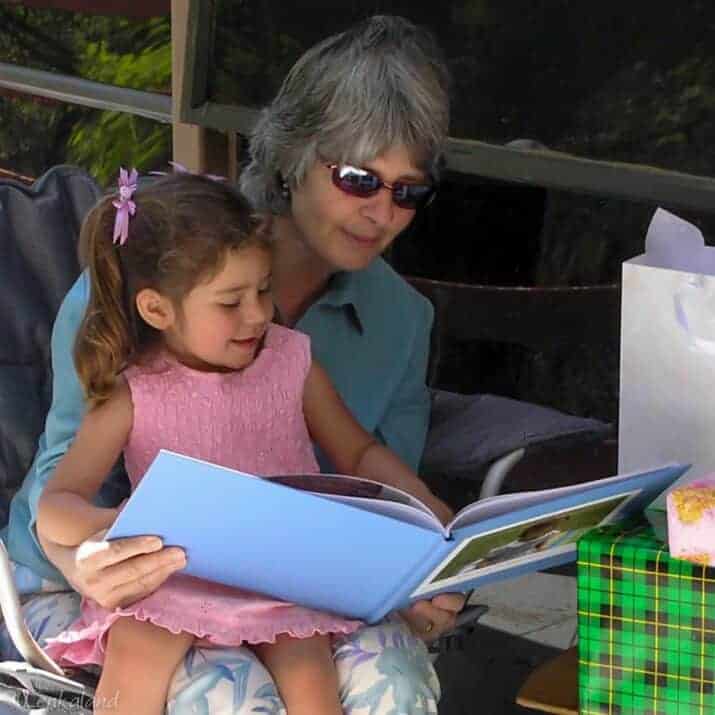
Seven years later, we learned that she has Dyslexia. She doesn’t see books in the same way as me.
As a teacher, I assumed (wrongly) that Dyslexia is about reversing letters and reading backward. I learned that Dyslexia covers a wide range of reading and math challenges. Dyslexia means that the brain processes sounds and/or symbols differently.
Signs of Dyslexia
How do we know if a child learns differently and needs extra help and time?
The following list shares the traits I saw in my daughter during her preschool and kindergarten years. I am also a classroom teacher and have seen these traits in children that received a diagnosis after leaving my kindergarten/first grade class.
I share this list, not to alarm anyone, but to encourage support for different learners. Directions to try harder and focus rarely work. Instead, do research, talk to teachers, and try lots of learning games. All children can learn. And my hope is that children will feel confident and capable along the way.
So, my daughter’s early signs of reading challenges:
Not reading from beginning to end of book: She would sit still for a page or two, then take the book and flip back and forth. I would get so frustrated. Why do they write so many books in sequence? I would think. I learned to distill a paragraph into a sentence to keep us moving quickly. We loved non-fiction books with collections of photographs.
Resistant to text: See above. She lost interest very quickly. She would tell her own stories based upon the illustrations (which was charming). When I tried reading the words, she took the book into another room.
Unable to rhyme: Many children can be “led” into a rhyme, such as I would not eat them with a cat, I would not eat them with a … And they should say RAT. However, my girl never caught onto this game. She would call out MOUSE with certainty. She didn’t hear relationships between sounds, which made learning to read a big challenge.
Unable to blend sounds: My big, scary moment as a mom came later, in first grade. We were practicing sight word flashcards and she saw IT. She was stumped. I gave her the two sounds- ‘i’ and ‘t’ without success. So I said the sounds closer and closer together. Oh! she said in triumph. Finally! I thought. She beamed. TO! I knew then we were on a different path. You can hear this when she is learning to say her name in this video: http://www.youtube.com/watch?v=dhjltmfDNgM&feature=g-crec-u. She separates the sounds instead of putting them together
Guessing from last sound: As she did on our flashcard, she often guessed from the last sound she heard. If she sounded out c-a-t, she guessed TAG or TO or TROUBLE. Her guesses often had little or nothing to do with the story. They felt random.
Inability to recognize patterns from page to page: This connected to above. She could read a story with very repetitive sentences, yet each sentence or page became a brand-new world. Even when I pointed out that words matched, she had to break down every word on the page. It was exhausting for both of us. Even when she did guess, she was so wrapped up in figuring out one word at a time, she couldn’t take a logical leap. Oh, the story is about a cat, so this probably says cat. No, she sounded it out every. Single. Time.
Struggles to retain learning: We would work so hard and I felt confident that she ‘got it’. We were moving forward! Then we sat the next day and everything was brave-new-world. What happened? Where did yesterday’s work go? We would both get so frustrated. She didn’t retain what she learned in reading. This happens with all children, which is why we present learning lots of different ways. For my daughter, though, it was very inconstant. She did retain skills in other areas. Her math lessons ‘sank in’ so that she remembered what she had done the day before. Letter and sounds, though, were so hard for her to remember. We tried songs and games and everything. Finally, they ‘stuck’ but it was a long road.
Reading big words is easier than reading small words: I see this with students in class as well as my own girl. We think reading is coming together because they can read beautiful and lizard. How do they know magical, yet struggle with for? Because all children are intelligent. And they memorize words. The longer words are easier to memorize. Not many words look like princess. Yet the smaller words have many possibilities- for, from, free, fir, far… It’s tricky to memorize every single word you see. So she struggled because the foundational work wasn’t intuitive for her.
“Piles” sounds- super becomes purse: For my girl, sounds were a necklace with no string. The beads scattered. By the time she made the last sound, she forgot the first. They didn’t sink past her working memory. Think about a phone number. Your own number is easy, right? Because it is in deep and doesn’t require active (working) memory. Then, think about learning a new phone number. You repeat it over and over and usually write it down. Holding that information is work. For my girl, every sound lived in her working memory. She couldn’t pull from the well of information to help make sense of a word. She held it like a new phone number and made her best guesses. A fascinating assessment had her repeat back numbers out of sequence. She could repeat 2 numbers and 3 numbers. The fourth number, though, messed up everything. It wasn’t that she couldn’t remember the last number. She couldn’t remember any numbers. Her working memory couldn’t hold it all. This information was so valuable for me because I could give her clues that matched her abilities- I would only give her three sounds at a time. *Side note: Her memory for things in context was exactly the opposite. Put things into a narrative, or ask her about real life, and she scored at the top of her age-expectations. Out of context was a struggle while in context she was super-strong. This helped me create stories to remember random reading rules (another post :)). No wonder she got frustrated with herself.
Doesn’t ‘generalize’ skills: My daughter would learn in one place, then be unable to transfer that learning to other places.. Flashcards were frustrating, because she would learn it in the flashcard, yet be unable to recognize the same word in a book. This skill is called generalizing, to know that the word STOP on a stop-sign is STOP everywhere, not just on the sign. Or on a flashcard. She would learn a word one day, then completely forget it the next day. Or she knew it on the cover of a book, and couldn’t read it inside the book. She worked so hard!
Effort and exhaustion: This list shows how some children work so hard just to fall further and further behind their peer group. Imagine pouring everything you have into a task, yet coming up short again and again and again. So treating children with kindness through this journey is so important. My daughter would crash after school. She worked so hard all day. When she got home, she needed serious downtime. We always did homework together so I could jump in when I saw her tiring out. She is in fourth grade now and we still are a homework team. They need cheerleaders. Sprinkle success through the frustration. Read directions and word problems out loud. Give tons of support. They will get there. And we want them to be confident and feel capable along the way.
After all, the challenges are not a whole child. Along with these challenges, my daughter has amazing gifts. Her assessments showed that incredible strengths in other areas (uneven skills). These are traits we see in children who need extra reading support:
Rich imagination: Like I said, she was very invested in her own stories. Her imagination created amazing narratives that were often more interesting than the actual text. She loved creating stories. Just not reading them 🙂
Vivid memory for experiences: Ask her what color her dress was at her fourth birthday party. Go ahead. She will remember. And probably my dress, too. She has an incredible eye for detail and amazing memory. Unfortunately, this ability to remember didn’t translate to sounds and words (yet). It just didn’t make sense that she would be able to remember so much, yet forget every learning activity related to reading.
Loves books: Her resistance to reading wasn’t about books. No, she loved books. She brought them everywhere. She had reading nooks and favorite stories. She loved books as gifts. It was the words inside the books that brought resistance.
Incredible storyteller: Whenever I wanted a good story, I knew who to ask. She entertained all of us with vivid storytelling. She would retell stories with detail and colorful characters. She loved stories. Which made the struggle to read them so difficult to believe. She had all of the tools. She just didn’t know how to use them.
Writing this list gives me such empathy for my girl. She is a warrior. She is gaining skills now with help. And I am grateful that I watched for these clues before we knew her dyslexia story. Children often hear “try harder”. They may be told that they cannot play until they finish homework.
Their first challenge is learning to process sounds and symbols (read).
Their second challenge is to stay positive along the way.
Every child shows one or more of these traits as they learn. If you see one or more over a week (or month), do not worry. The time to pay attention is if you see them over long periods of time. Children are different. Many make the reading leap all on their own. However, if you have questions, please talk to your child’s teacher or ask for a referral to a learning specialist. Classroom teachers do their best, but we are not trained in all the fancy learning styles. I learned so much through my daughter. So if you feel your child needs more support, please ask for a specialist.
The journey may not be easy, but it can be enjoyed. We listen to audio books together, take turns reading, and share favorite stories even though my daughter is not a fluent reader (yet). I know she will get to reading fluency one day. Until then, I treasure the chance to spend more time together. She is an amazing, unique light in the world. As are all children. Shine on 🙂
* side note: Anika also has challenges with auditory processing, meaning that she takes extra time to process information that she hears. Everyone with dyslexia is different so I encourage a lot more research. This information is meant to help, not replace time spent with a professional. I encourage all families to look at their children and see what learning styles inspire or frustrate them. We are all different. Which is awesome. Celebrate learning 🙂

About Lenka Vodicka
Lenka Vodicka is a classroom teacher and mom. She learns from children every day. Follow her blog, LenkaLand: My Creative Life, read her book Forest Fairy Crafts, and follow her on Pinterest.
Learn what teachers need to know about Dyslexia on The Measured Mom.
KEEP READING
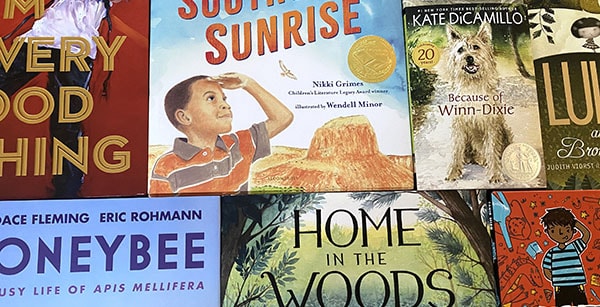
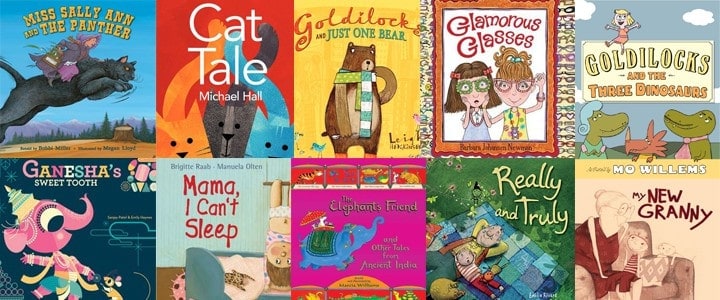
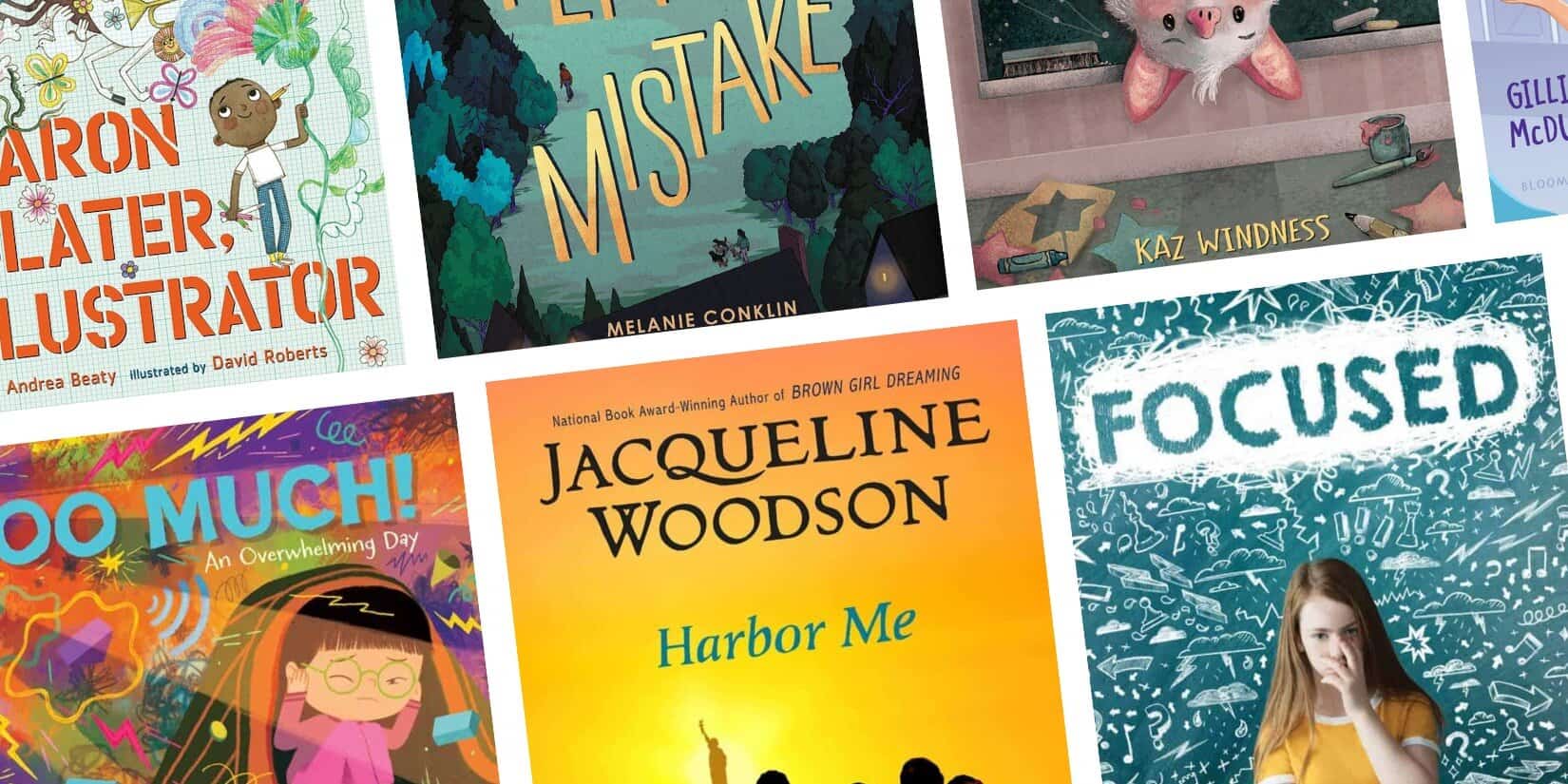
Books about Characters with Learning Disabilities


My oldest daughter is dyslexic and now 29 years old. School was extremely hard on her. We both had some very rough times with teachers and her peers not understanding her differences. She has told me that she had thought of suiside in middle school, I had no idea at the time. It breaks my heart to know this now. She is now happily married with 2 boys and a third on the way. She runs a n organic co-op and has a direct sales job. We are all very proud of her.
I really hope that the population has a whole starts to understand that being different is not a bad thing, but a positive one.
wow, that breaks my heart for her, too. And I agree, I wish our population and the school system would embrace different ways of learning and being! xx
this breaks my heart, too. My daughter is starting middle school next year and I worry for her. Middle school is hard on everyone.
Our world needs new ideas so much, we need these different thinkers. My dream is that we all see how we compliment each other, instead of trying to bring everyone to sameness. Hopefully our generation will give their generation the strength to pass on true change. I am glad to hear that your girl’s story brought her to a good space 🙂
My son (1st grade) is Dyslexic and as I read this I thought, This is my child you are describing. It is a struggle – everyday.
sending you a big hug!
sending good thoughts! It is a struggle. There is hope. I am seeing the lights flip on and reading is getting so much easier for her. Keep being patient and supportive and advocate for him. I wish you lots of strength!
Thank you for taking the time to educate people on dyslexia. It’s unfortunate that so many teachers think it’s only a matter of flipping letters and numbers. We are homeschoolers now because we did not get support from the private school system we were involved with. I brought my concerns to the teacher years ago and they ignorantly disregarded my concerns because dyslexia to them was flipping. We are now involved in the seeing stars program and retraining some symbol imagery. It’s an adventure, but we will get thru. 🙂 I really appreciate your post!!! Thank you!!!
You are very welcome. Many people have a vary narrow definition (flipping letters and numbers) which is why I wanted to help spread the word. We keep homeschool in our idea-book if she starts to struggle too much. We are lucky that her charter school shares our vision of celebrating strengths and supporting challenges. We had to go backwards too with building symbols and sounds. Very systematic learning. Seems to take forever and than a light clicks on and she sails 🙂 You are so right- we will get through 🙂
Thank you for sharing. Brings back memories of my son when he was that young. He is now 14 and is doing his best in school. He had an amazing 1st grade teacher that recognized the signs and had him tested for dyslexia. It was perfect timing because we just didn’t know what to do to help him retain what he was learning. I still remember how one day he read (or recited a short story) perfectly and the next had no clue what the word THE was. After researching Dyslexia I related to a lot of the symptoms myself. I am so happy that there is more awareness for school age kids. I’m hoping that someday there will be for the workplace environment. I love my job but I still get sweaty palms when put into a training/ classroom environment.
Isn’t that the truth! I get that way when I have to spell a word that I should know (like calender) in front of the class and I can’t remember the right vowel combinations :). I don’t have a Dyslexia diagnosis, but I related to a lot of the challenges when I researched for my daughter. They give us a chance to learn about ourselves :). I am happy to hear that your son is doing well! It is indescribable joy when they start reading. It’s just clicking for my girl and I celebrate every time she reads something to me 🙂
This list is wonderful. Helps me validate certain concerns while solidifying others. I have a DS (11), DD (9) and a possibly DS (5) all with attention issues and Dyslexia….okay the youngest is just dealing with a speech delay, poor word recall, and detecting any symbols (letter, numbers, shapes). It has presented differently in each child. Thank you!
thanks for sharing, Michele!
Isn’t that the truth! My daughter had a stutter and would repeat herself often (she actually still repeats herself a lot). She would say, “I want, I want, I want” as though she were stuck in a thought. Now, she tells us news as though it were brand new. I think she is just sorting the information out :). My son isn’t showing any of these traits as he’s growing. We sure learn through our children 🙂
my daughter does that! (im dyslexic). Shes only 4 so doesn’t know how to read or write but has a lot of the behaviours listed above